Online shoppers expect orders to ship the same day, arrive within 48 hours, and return without friction. Meeting that bar consistently is what separates ecommerce brands that scale from those that stall — and almost all of it comes down to one operational discipline: order fulfillment.
Whether you’re launching your first Shopify store, expanding from retail to direct-to-consumer, or feeling the strain of fulfilling thousands of orders a week in-house, understanding the full fulfillment process is the foundation for every cost, speed, and customer-experience decision you’ll make.
This guide breaks down what ecommerce order fulfillment actually involves, the six steps every brand needs to get right, the three main fulfillment strategies and how to choose between them, and how working with a 3PL warehouse changes the economics at scale.
What Is Ecommerce Order Fulfillment?
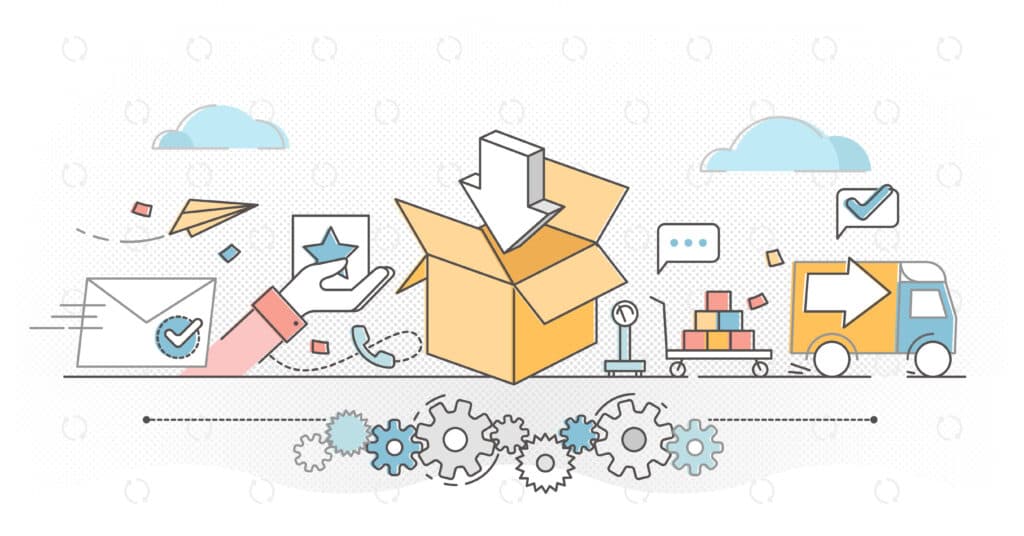
Ecommerce order fulfillment is the end-to-end process of receiving inventory, storing it, processing customer orders, picking and packing those orders, shipping them to customers, and handling any returns that come back.
It’s everything that happens between a customer clicking “Buy” and the package arriving at their door — plus everything that has to be in place beforehand to make that possible.
Most brands underestimate fulfillment in the early stages because the volume is manageable from a garage or back office. The problem is that fulfillment scales non-linearly. Doubling your orders rarely doubles your costs; more often it triples them once you factor in late shipments, stockouts, returns, customer service tickets, and the overhead of managing it all. That’s why a clear, repeatable process matters from day one.
The 6 Steps of the Ecommerce Order Fulfillment Process
Every order, regardless of channel or product type, moves through six stages. The brands that win are the ones that have systematized each one.
1. Receiving Inventory
Fulfillment starts before the first order is ever placed. Inventory has to be received from your suppliers or manufacturers, counted against the purchase order, inspected for damage, and logged into your inventory management system.
Mistakes at this stage compound. A miscounted SKU here becomes a stockout three weeks later or an oversell on Black Friday. A skipped inspection becomes a wave of returns. Brands working with a 3PL fulfillment partner get this step done with barcode scanning, ASN matching, and real-time inventory updates — typically within 24 to 72 hours of receipt.
2. Warehousing and Inventory Storage
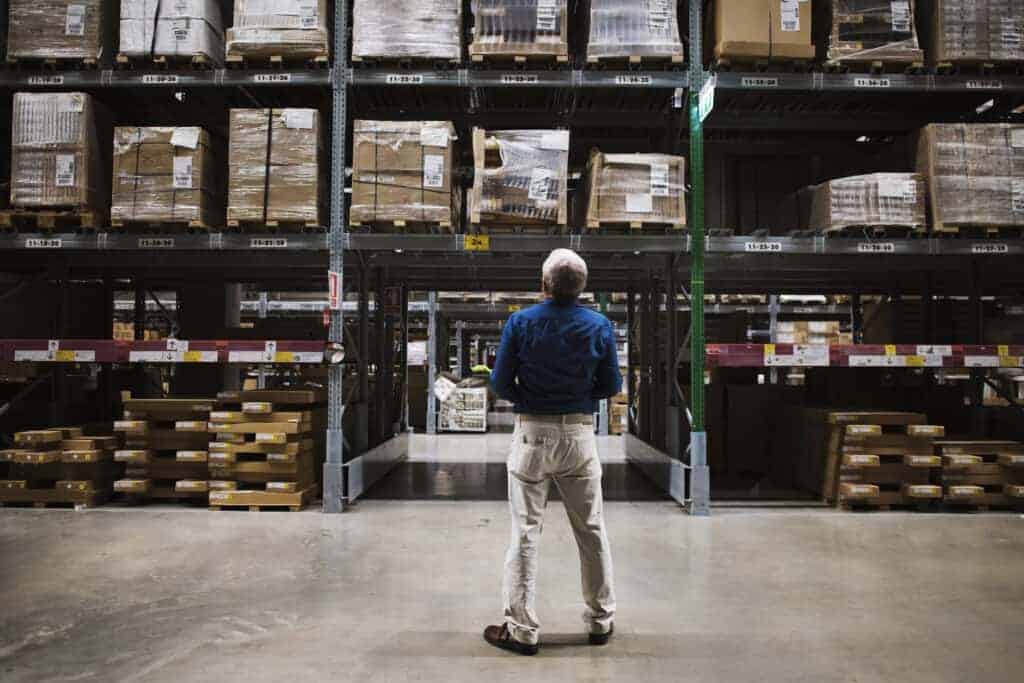
Once received, inventory needs a home. Good warehousing isn’t just empty shelf space; it’s strategically organized storage where high-velocity SKUs are placed for fastest pick paths, slow-moving items are stored efficiently, and every unit is tracked by location.
This is also where multi-location strategy comes into play. Holding inventory in a single warehouse means most customers are 3 to 5 shipping zones away from their order. Splitting inventory across regional warehousing locations — for example, an East Coast, Midwest, and West Coast footprint — can cut average shipping zones in half and reduce ground transit times by 1 to 2 days.
3. Order Processing and Picking
When a customer places an order, your store transmits the order data to your fulfillment system. From there, a pick list is generated and a warehouse associate (or a robotics system) retrieves the items from their assigned locations.
Speed and accuracy are the two metrics that matter here. Industry-leading pick accuracy sits at 99.9% or higher; anything below 99.5% means roughly 1 in every 200 customers is getting the wrong item — and writing a complaint. Order cutoff times also matter: same-day shipping is now the default expectation, and a 2:00 PM cutoff is standard for most ecommerce 3PLs.
4. Packing
Picked items are brought to a packing station, where they’re matched to the appropriate packaging — a poly mailer, corrugated box, custom-branded mailer, or a kitted assembly for subscription boxes and bundles. Packing materials, dunnage, and inserts are added, and a shipping label is generated.
Packaging decisions affect more than aesthetics. Dimensional weight pricing means oversized boxes can double your shipping cost on the same product. Under-protective packaging drives up damage claims and returns. The right balance — protective, right-sized, and on-brand — is what keeps both shipping costs and customer satisfaction in line.
5. Shipping
Once packed, the order is handed off to a carrier — USPS, UPS, FedEx, DHL, or a regional carrier — and a tracking number is sent to the customer.
Shipping is where multi-location warehousing pays off most directly. The closer your inventory sits to the customer, the lower the zone, the cheaper the rate, and the faster the delivery. Brands shipping from a single warehouse on one coast routinely pay 30 to 50% more in shipping costs than competitors using a distributed network. Strategies like zone skipping with regional carriers and rate-shopping across multiple carriers can drive those costs down further.
6. Returns Processing (Reverse Logistics)
Returns are a fact of ecommerce — averaging 15 to 20% of orders, and substantially higher in apparel. The question isn’t whether you’ll have returns; it’s how efficiently you process them.
A strong returns workflow includes a customer-facing return portal, fast inspection upon receipt, automated restocking of resaleable items, clear disposition rules for damaged goods, and prompt refunds. Done well, returns become a retention tool. Done poorly, they tie up working capital and erode margin.
How to Choose an Order Fulfillment Strategy
There’s no universally correct fulfillment model. The right choice depends on your order volume, margin profile, product type, growth stage, and how much operational complexity you want to own. The three main options:
In-House (Merchant) Fulfillment
You handle everything yourself — storage, picking, packing, shipping, returns. This works well for very early-stage brands (under roughly 50 orders per day), highly customized or fragile products, or businesses where fulfillment is part of the brand experience.
The tradeoff is that fulfillment quickly consumes the founder’s time, and warehousing and labor costs scale faster than revenue once volume grows.
Dropshipping
Your supplier ships orders directly to your customer. You never touch inventory. This minimizes upfront capital and inventory risk, but it also means giving up control over fulfillment speed, packaging, quality control, and customer experience. Margins tend to be thin and differentiation is difficult.
Third-Party Logistics (3PL)
You partner with a fulfillment provider that handles receiving, storage, picking, packing, shipping, and returns on your behalf. You retain control of your brand, customer experience, and inventory, while gaining the infrastructure, software, carrier rates, and multi-location footprint of a logistics specialist.
Most growing ecommerce brands move to a 3PL when they hit the point where in-house fulfillment is either capping growth or eroding margin — typically somewhere between 100 and 500 orders per day, though it varies widely by product. For a deeper look at the differences between consumer and wholesale fulfillment, see our breakdown of B2B vs. DTC operational differences.
How to Choose the Right Fulfillment Center Location
Location is the single biggest lever in shipping cost and delivery speed. The right fulfillment footprint depends on three factors:
Where your customers are. Pull the last 6 to 12 months of order data and map it. If 60% of your orders ship to the eastern half of the U.S., a Southeast or Mid-Atlantic warehouse should be your primary location.
Where your inventory comes from. If you import through West Coast ports, a Southern California facility minimizes inbound transportation costs. If you manufacture domestically in the Midwest, a Detroit or Dallas/Fort Worth location may make more sense.
How fast you need to deliver. Two-day ground coverage of the continental U.S. typically requires three to four strategically placed warehouses. One-day coverage requires significantly more. Most growing brands start with one or two locations and add more as volume justifies it.
Fulex operates fulfillment centers in Chattanooga, TN, Dallas/Fort Worth, TX, Detroit, MI, New Castle, DE, and San Diego, CA, giving brands the ability to split inventory across the country and reach over 95% of U.S. customers in two days or less by ground.
How a 3PL Makes Ecommerce More Profitable
Brands that move to a 3PL at the right time typically see four kinds of impact:
Lower shipping costs from negotiated carrier rates and a multi-location footprint that reduces shipping zones. Lower fulfillment cost per order from the 3PL’s labor density and software efficiency. Faster delivery times that improve conversion rates and customer lifetime value. And reclaimed founder time — hours that move from packing tape and shipping labels to product, marketing, and growth.
The brands that struggle with the 3PL transition are usually the ones that wait too long, switch reactively after a peak season meltdown, or pick a partner on price alone without evaluating culture, technology, and communication fit. For more on getting that selection right, see our guides on 3PL partner selection and 3PL onboarding timelines and costs.
Frequently Asked Questions
What is the difference between order fulfillment and shipping?
Shipping is the single step of moving a packaged order from a warehouse to a customer. Order fulfillment is the entire process — receiving inventory, storing it, processing orders, picking, packing, shipping, and handling returns. Shipping is one part of fulfillment, not a synonym for it.
How long does ecommerce order fulfillment take?
For most ecommerce 3PLs, orders placed before the daily cutoff (typically 12:00 to 2:00 PM local time) ship the same day. From there, ground delivery takes 1 to 5 business days depending on the shipping zone. End to end, customers typically receive their orders within 2 to 6 days of ordering, with sub-2-day delivery achievable for brands using a multi-location fulfillment network.
When should an ecommerce business switch to a 3PL?
The most common signals are: order volume consistently exceeding 50 to 100 per day, fulfillment errors increasing, the founder spending more than 10 hours per week on packing and shipping, peak seasons becoming unmanageable, or shipping costs eating into margin because of single-warehouse zone limitations. Most brands switch between $1M and $10M in annual revenue, but the right timing depends on product type and growth rate more than revenue alone.
How much does ecommerce order fulfillment cost?
3PL fulfillment is typically priced as a combination of receiving fees, monthly storage (per pallet, shelf, or bin), pick and pack fees (per order or per item), packaging materials, and shipping costs at the 3PL’s negotiated rates. For most ecommerce brands, all-in fulfillment cost lands between $4 and $8 per order, before shipping. See Fulex pricing for specific rates.
What is the order fulfillment process for Amazon sellers?
Amazon sellers can use Fulfillment by Amazon (FBA), where Amazon handles fulfillment from its own warehouses; Seller Fulfilled Prime (SFP), where the seller meets Prime delivery standards from their own warehouse or 3PL; or Merchant Fulfilled Network (MFN), where the seller fulfills standard non-Prime orders. Many brands use a hybrid approach and rely on a 3PL for FBA prep, SFP fulfillment, and DTC orders from a single inventory pool. See our guide to Amazon fulfillment in 2026 for more.
Can a 3PL handle both B2B and DTC fulfillment?
Yes. A capable 3PL can fulfill direct-to-consumer parcel orders alongside B2B and wholesale shipments — including retailer routing guides, EDI compliance, palletized LTL freight, and big-box retailer requirements. Running both channels from one inventory pool eliminates duplicate stock and simplifies forecasting. Learn more about B2B fulfillment with Fulex.
Build a Fulfillment Process That Scales With You
The ecommerce order fulfillment process is straightforward to map out and surprisingly difficult to execute consistently as you grow. The brands that get it right treat fulfillment as a strategic advantage — not a back-office cost — and build the infrastructure (or partner with someone who has it) before the cracks start to show.
If you’re evaluating whether a 3PL is the right move, or you’re already working with one and want to see what better looks like, request a custom quote from Fulex. We’ll walk through your current volume, locations, and pain points and show you exactly where a multi-location 3PL fits — and where it doesn’t.