How this flexible shipping option has gained popularity in e-commerce and why it may be best for your business
So long cardboard boxes. Hello poly mailers!
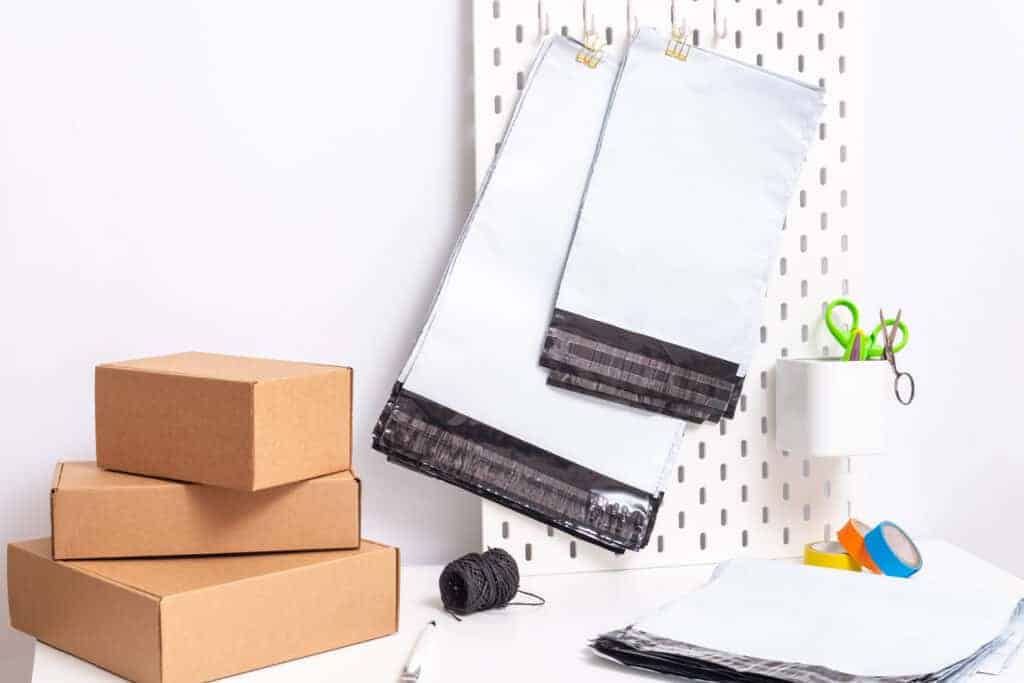
Packaging is one of the most underestimated cost centers in ecommerce. The choice between a corrugated box and a poly mailer can change your per-order shipping cost by 20 to 40%, your warehouse storage footprint by an order of magnitude, and your damage rate in either direction depending on the product.
For most ecommerce brands shipping apparel, soft goods, accessories, books, or non-fragile health and beauty products, poly mailers are the right answer — and the brands that have figured this out are quietly saving thousands of dollars a month while their competitors keep stuffing t-shirts into oversized boxes.
This guide covers what poly mailers are, the four main types and when to use each, how poly mailers compare to boxes across cost and performance, standard sizes and how to choose the right one, realistic pricing, and the products and use cases where poly mailers don’t make sense.
What Are Poly Mailers?
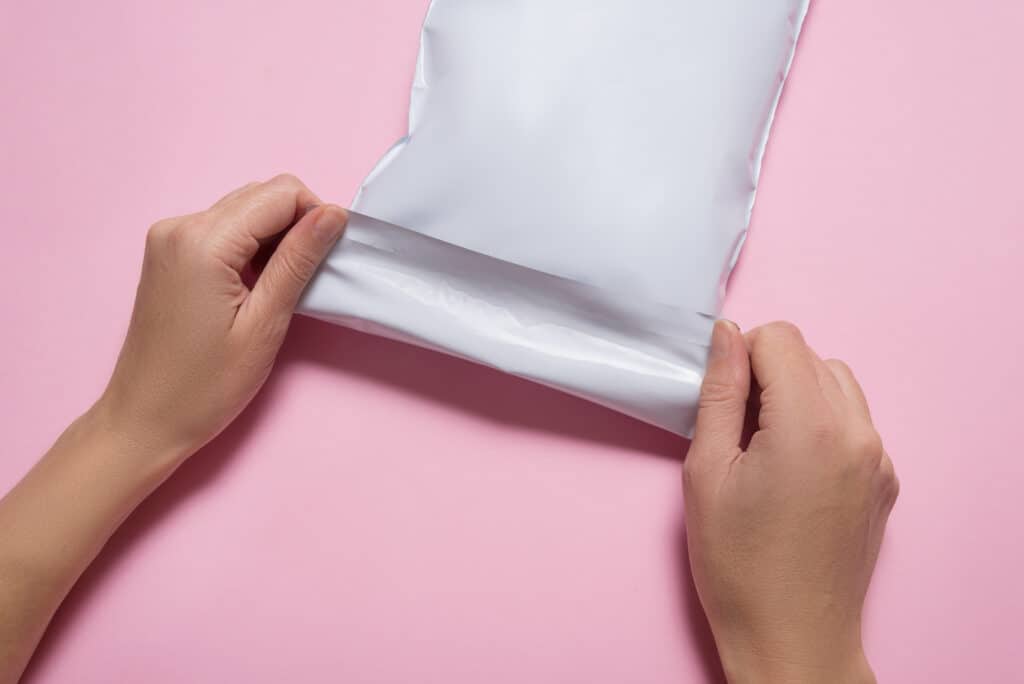
Poly mailers are lightweight, flexible shipping envelopes made from polyethylene plastic. They have a self-sealing adhesive strip, take up roughly a tenth of the storage space of an equivalent box, and are designed to protect non-fragile products through standard parcel handling.
They’ve become the dominant packaging format for direct-to-consumer apparel, soft goods, and small accessories for three reasons: they’re cheaper to buy, cheaper to ship, and faster to pack than boxes. For high-volume ecommerce brands, those efficiencies compound quickly.
Poly Mailers vs. Cardboard Boxes: Which Is Better?
The right answer depends on your product, but for any item that doesn’t need rigid protection, poly mailers win on almost every operational metric.
| Factor | Poly Mailers | Cardboard Boxes |
|---|---|---|
| Cost per unit (at volume) | $0.05–$0.40 | $0.30–$1.50+ |
| Dimensional weight impact | Minimal — conforms to product | Significant — can double shipping cost |
| Storage footprint | ~10% of box volume | Bulky, requires far more shelf/pallet space |
| Packing speed | 30–60 seconds per order | 60–120 seconds per order |
| Protection for fragile items | Limited (bubble mailers help) | Excellent with proper void fill |
| Branding potential | High (printed exterior) | High (printed or custom-shaped) |
| Sustainability | Recyclable variants available; less material overall | Curbside recyclable, renewable material |
| Theft resistance | Mailbox-friendly, less visible | More visible, often left at door |
| Best for | Apparel, soft goods, books, supplements | Fragile items, multi-item bundles, premium unboxing |
The dimensional weight factor alone is enough to drive most apparel brands toward poly mailers. Carriers calculate shipping cost as the greater of actual weight or dimensional weight (length × width × height ÷ a divisor). A folded t-shirt in a 10×8×4 box gets billed at the box’s dimensional weight; the same shirt in a poly mailer gets billed at its actual weight. Across thousands of orders, the difference is substantial.
The 4 Types of Poly Mailers
Not all poly mailers are interchangeable. Choosing the right type depends on your product’s fragility, value, and brand positioning.
Standard Poly Mailers
The most common and lowest-cost option. Standard poly mailers are typically 2 to 3 mil thick (mil = thousandths of an inch) and offer no internal padding. They’re ideal for apparel, fabric goods, and other items where the product itself absorbs handling without damage.
Best for: T-shirts, hoodies, socks, towels, fabric accessories, books with flexible covers.
Typical cost at volume: $0.05–$0.15 per unit.
Bubble (Padded) Poly Mailers
Bubble mailers combine a poly exterior with a bubble-wrap interior lining. They protect against light impact and abrasion without the bulk or cost of a corrugated box. The tradeoff is higher per-unit cost and more storage space.
Best for: Hardcover books, small electronics accessories, jewelry, cosmetics in rigid containers, supplements in glass bottles.
Typical cost at volume: $0.15–$0.40 per unit.
Expanded (Tear-Resistant) Poly Mailers
Heavier-gauge mailers, typically 3 to 4 mil or higher, designed to withstand rough handling, weather exposure, and tampering. Many include opaque construction to obscure contents and tamper-evident seal closures.
Best for: Higher-value apparel, sensitive shipments, products moving through harsher carrier networks, multi-piece orders requiring extra durability.
Typical cost at volume: $0.10–$0.25 per unit.
Eco-Friendly Poly Mailers
Made from recycled content, biodegradable polymers, or compostable materials. Performance varies — true compostable mailers tend to be slightly less durable than virgin polyethylene, while recycled-content mailers perform nearly identically to standard. Eco mailers run a meaningful premium but increasingly pay for themselves in conversion lift among sustainability-conscious buyers.
Best for: Brands with a stated sustainability position, beauty and wellness brands, apparel brands targeting Gen Z and millennial buyers.
Typical cost at volume: $0.10–$0.30 per unit.
Benefits of Poly Mailers for Ecommerce
Lower Shipping Costs and Dimensional Weight Savings
The most direct financial benefit. Because poly mailers conform to the product, they keep dimensional weight close to actual weight. A 1-pound t-shirt order shipped in a poly mailer costs roughly what a 1-pound shipment should cost; the same order in a 10×8×4 box can be billed at 2 to 3 pounds dimensional weight.
Faster Packing and Higher Throughput
Pack stations using poly mailers consistently move 30 to 50% more orders per hour than stations using boxes. There’s no folding, no taping, no void-fill insertion — just slip in the product, peel the adhesive strip, and apply the label. At scale, this translates into lower fulfillment cost per order and higher daily order capacity from the same labor.
Reduced Theft and Mailbox-Friendly Delivery
Poly mailer shipments fit in standard mailboxes, eliminating the most common porch piracy scenario. Even when delivered to a doorstep, the flat profile is less visually obvious than a stack of boxes.
Branding and Customization
Custom-printed poly mailers turn packaging into a brand asset. Logo, brand colors, and inside-of-mailer messaging are standard at order quantities of 1,000 to 5,000+ units. Pair with branded inserts and tissue paper to deliver a strong unboxing experience without the cost of a custom rigid box.
Sustainability Options
Recycled-content and curbside-recyclable poly mailers meaningfully reduce material weight and waste compared to corrugated boxes — typically 80% less material per shipment. Compostable options are available for brands with formal sustainability commitments.
When to Use a Poly Mailer (and When Not To)
Poly mailers work for any product that meets three criteria: not fragile, not heavy enough to tear the mailer, and not dependent on a rigid unboxing presentation as a brand experience.
Strong fits for poly mailers:
- Apparel, including outerwear, knits, undergarments, and accessories
- Soft goods like blankets, towels, plush items, and fabric home goods
- Books with flexible covers, magazines, printed materials
- Health and beauty products in unbreakable packaging (powders, supplement pouches, cosmetics in plastic)
- Plush toys, pet apparel, soft pet products
Use a box instead for:
- Glass, ceramics, or anything fragile
- Electronics and devices with screens
- Items over roughly 5 pounds (mailer can tear, label can detach)
- Sharp-edged or pointed items that may puncture the mailer
- High-end products where unboxing is a deliberate brand experience
- Multi-item kits requiring a structured presentation
For products that fall into the “use a box” category, the right packaging strategy becomes a meaningful damage-prevention investment, especially for items shipped on long-haul routes.
Poly Mailer Sizes and How to Choose the Right One
Poly mailer sizing is dictated by the flat dimensions of the folded or compressed product, plus a small allowance for ease of insertion and sealing. The standard sizes used across ecommerce:
| Size (inches) | Best For |
|---|---|
| 6 × 9 | Jewelry, small accessories, single paperback books, cosmetics |
| 7.5 × 10.5 | Children’s apparel, single-item undergarments, small soft goods |
| 9 × 12 | Folded t-shirts, single-item apparel, hardcover books |
| 10 × 13 | Standard adult apparel, folded sweaters, multi-piece small orders |
| 12 × 15.5 | Hoodies, larger apparel items, two-piece outfits |
| 14.5 × 19 | Coats, multi-item apparel orders, blankets |
| 19 × 24 | Bedding, large blankets, multi-piece bulk orders |
The most common mistake brands make is buying one size larger than needed “just in case.” Each size up adds dimensional weight risk and per-unit cost. Brands shipping a single SKU should size precisely; brands with mixed SKU orders should standardize on 2 to 3 size options that cover 95% of order configurations.
How Much Do Poly Mailers Cost?
Pricing varies by type, mil thickness, custom printing, and order quantity. Realistic ranges at typical ecommerce volumes:
- Standard poly mailers: $0.05 to $0.15 per unit
- Bubble (padded) poly mailers: $0.15 to $0.40 per unit
- Expanded / tear-resistant: $0.10 to $0.25 per unit
- Eco-friendly / recycled content: $0.10 to $0.30 per unit
- Custom-branded poly mailers: Add $0.05 to $0.20 per unit on top of base cost, with minimums typically starting at 1,000 to 5,000 units
For Fulex clients, standard poly mailers are included in the per-order pick-and-pack fee at no additional cost — meaning the packaging line item disappears from your COGS for orders that use them. See Fulex pricing for specifics.
How Fulex Helps Brands Standardize on Poly Mailer Packaging
Choosing the right packaging is one decision; executing it consistently across thousands of orders is another. Fulex helps ecommerce brands standardize their packaging strategy as part of the broader order fulfillment process, including:
- Stocking standard poly mailer sizes at no additional packaging cost
- Storing and using custom-branded poly mailers supplied by the brand
- Pairing poly mailers with branded inserts, tissue paper, and thank-you cards as part of kitting and assembly workflows
- Rate-shopping carriers automatically to capture the dimensional weight savings poly mailers create
- Splitting inventory across multiple fulfillment centers so poly mailer shipments reach customers in 1 to 2 days
If you’re evaluating whether your current packaging strategy is leaving money on the table, that’s the kind of audit a 3PL evaluation should include. For more on what to look for, see our guide to 3PL warehouses, benefits, and costs.
Frequently Asked Questions
Are poly mailers waterproof?
Standard poly mailers are water-resistant, not fully waterproof. They protect against light rain, brief moisture exposure, and surface condensation, but submerged or prolonged exposure can allow moisture in through the adhesive seam. For products particularly sensitive to moisture, a sealed inner poly bag inside the mailer adds full waterproofing.
What mil thickness do I need for poly mailers?
Mil thickness measures the gauge of the plastic — higher mil means thicker and more durable. For most apparel and soft goods, 2.5 mil is sufficient. For higher-value items, mixed-product orders, or shipments moving through rougher handling, 3 to 4 mil is recommended. Below 2 mil, tears and label issues become common.
Can poly mailers be recycled?
Most standard poly mailers are made from #4 LDPE plastic, which is not accepted in curbside recycling but can be recycled through grocery store plastic film drop-off programs. Recycled-content and store drop-off labeled mailers are the most common path to reduced environmental impact. True curbside-recyclable poly mailers are available but are typically a paper-poly hybrid, which trades some durability for easier disposal.
Are poly mailers cheaper than boxes?
Yes, in almost every dimension. Poly mailers cost 50 to 80% less per unit than equivalent corrugated boxes, take up roughly 10% of the storage space, and reduce dimensional weight surcharges from carriers. The combined savings typically run $0.50 to $2.00 per order shipped — meaningful at volume.
Do poly mailers work for Amazon FBA?
Yes. Amazon accepts poly mailers for FBA shipments as long as they meet Amazon’s prep requirements: sealed, properly labeled, with required suffocation warnings on bags above 5 inches. Many Amazon sellers use 3PLs for FBA prep specifically to standardize poly mailer prep at scale.
What’s the difference between poly mailers and bubble mailers?
A poly mailer is a single-layer plastic envelope with no internal padding. A bubble mailer is a poly mailer with bubble wrap laminated to the inside. Bubble mailers add light impact protection at higher cost and bulk; standard poly mailers are cheaper, lighter, and faster to pack but offer no cushioning.
Can poly mailers be used for international shipping?
Yes, with caveats. International shipments face longer handling chains and more variable conditions, so 3 to 4 mil thickness is recommended over the 2.5 mil standard for domestic. Customs documentation must be securely attached, typically in a clear pouch adhered to the exterior.
The Right Packaging Decision Pays Off Every Single Order
Packaging is the kind of operational detail that compounds. A $0.50 per-order savings from switching to poly mailers, multiplied across 50,000 orders a year, is $25,000 — and that’s before factoring in the throughput gains, dimensional weight savings, and storage efficiency.
For brands shipping apparel, soft goods, books, and non-fragile health and beauty products, poly mailers are almost always the right default. The decision isn’t whether to use them, but which type, what size, and how to integrate them into a fulfillment workflow that captures every dollar of efficiency they enable.
If you’d like a packaging audit as part of evaluating your fulfillment strategy, request a custom quote from Fulex. We’ll review your current packaging mix, dimensional weight exposure, and per-order packing time — and show you exactly where switching to poly mailers (or away from them) makes financial sense.