Fast delivery has become an expectation rather than a competitive advantage. For ecommerce brands, offering quick shipping can help reduce cart abandonment, improve customer satisfaction, and increase repeat purchases. But achieving reliable speed requires more than simply partnering with a warehouse that claims to offer fast fulfillment. A same-day and next-day shipping 3PL can only deliver on those promises when three things work together: inventory positioned close to customers, warehouse operations capable of processing orders quickly, and carrier networks that can reach destinations within the required transit window. In other words, shipping speed is a system—not a feature.
Before choosing a fulfillment partner, brands should understand what same-day and next-day shipping really mean, the infrastructure required to support them, and how to evaluate a provider’s claims.
What Does a 3PL Need to Offer Same-Day or Next-Day Shipping?
At its core, fast shipping ecommerce depends on three factors:
- Inventory proximity to the customer
- Fast order processing within the warehouse
- Carrier transit times that support delivery goals
Same-day shipping fulfillment means an order is received, picked, packed, and handed to a carrier on the same day it is placed, provided it arrives before the daily cutoff time. Next-day delivery 3PL services go one step further by ensuring the package arrives the following day. This typically requires inventory to be located within a close shipping zone or the use of expedited carrier services. Even the most efficient warehouse cannot consistently provide fast delivery if inventory is located thousands of miles away from the buyer.
Same-Day Shipping vs. Same-Day Delivery vs. Next-Day Delivery: What’s the Difference?
These terms are often used interchangeably, but they represent different parts of the fulfillment process.
Same-day shipping refers to dispatch. The order leaves the fulfillment center on the same day it is placed. Same-day delivery means the customer receives the order on the same calendar day. This usually requires local courier networks and dense metropolitan coverage. Next-day delivery means the package arrives the following day, either through expedited transportation or strategic inventory placement close to the customer.
For ecommerce brands, the distinction matters. Customer-facing promises should align with actual fulfillment capabilities. When expectations and delivery performance do not match, customer trust suffers.
What Infrastructure Does a 3PL Need for Fast Shipping?
Reliable shipping speed comes from operational design, not last-minute effort. A strong fulfillment strategy starts with a fulfillment center network that places inventory closer to customers. The shorter the distance between product and buyer, the shorter the required transit time. Warehouse technology also plays a major role. Modern warehouse management systems help ensure orders are routed, picked, packed, and shipped efficiently. Combined with streamlined workflows, these systems support consistent 3PL shipping speed even during periods of high volume.
Carrier flexibility is equally important. Multi-carrier shipping programs allow fulfillment providers to select the most effective carrier and service level for each destination, helping balance speed and cost. Finally, carrier pickup schedules matter. Late-day pickups and weekend operations can make the difference between a same-day shipment and an extra day of delay.
How Distributed Inventory Supports One-Day and Two-Day Ground Shipping
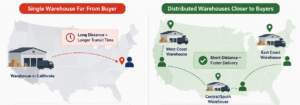
One of the most effective ways to improve delivery performance is through distributed inventory. Instead of storing all inventory in a single location, inventory is strategically placed across multiple regions. This approach allows standard ground shipping to reach more customers within one or two days, often eliminating the need for costly air services. For growing brands, a national fulfillment footprint can significantly improve two-day shipping coverage while controlling transportation expenses.
Fulex operates five fulfillment centers across multiple U.S. regions, giving brands access to the type of network that supports faster ground delivery across a broad customer base. The advantage is not simply speed—it’s the ability to achieve that speed more consistently and cost-effectively. The tradeoff is that inventory planning becomes more important. Brands must forecast demand accurately to ensure the right products are stocked in the right locations.
Why Order Cutoff Times Decide Everything
Suppose there is one metric that determines whether an order ships today or tomorrow: it is the order cutoff time. A cutoff time is the daily deadline by which orders must be received to qualify for same-day processing and carrier pickup. For example, an order placed before a 1:00 PM cutoff may ship the same day, while an order submitted after that deadline typically ships on the next business day.
Cutoff times are influenced by:
- Carrier pickup schedules
- Warehouse staffing levels
- Daily order volume
- Operational capacity
When evaluating a fulfillment partner, brands should ask not only whether same-day shipping is offered, but what percentage of orders actually ship the same day. Real performance data provides a far more accurate picture than marketing claims.
Coverage Reality: Where Fast Shipping Works and Where It Does Not
Not every destination can support same-day or next-day service. Fast delivery is generally easiest in metropolitan areas located near fulfillment centers and transportation hubs. Rural destinations often require longer carrier transit times, even when orders leave the warehouse quickly.
Alaska, Hawaii, and U.S. territories typically fall outside standard next-day ground coverage. Brands should also consider operational variables such as:
- Weekend schedules
- Holiday closures
- Weather disruptions
- Peak-season carrier capacity
A trustworthy 3PL will provide realistic shipping windows based on zones rather than offering blanket delivery promises.
How Much Does Same-Day or Next-Day Shipping Cost Brands?
Faster shipping almost always increases fulfillment costs. The key business decision is determining who pays for the added speed.
Common approaches include:
- Charging customers for expedited delivery
- Offering free fast shipping above a spending threshold
- Absorbing the cost as part of customer acquisition and retention efforts
A well-designed distributed inventory strategy can reduce costs by replacing expensive air transportation with shorter-distance ground shipping. Brands should evaluate shipping investments against broader business goals, including conversion rates, cart abandonment reduction, and customer lifetime value. The right decision depends on order volume, product margins, customer expectations, and shipping zones.
Key Takeaways About Same-Day and Next-Day Shipping With a 3PL
A successful same-day and next-day shipping 3PL relies on inventory proximity, dependable cutoff times, and strong carrier coverage working together as a single system.
For most ecommerce brands, distributed inventory remains the most effective path to achieving fast delivery while controlling shipping costs. A multi-region network, accurate inventory planning, and realistic performance reporting are often more valuable than aggressive shipping promises.
Before making a decision, compare your customer distribution and order volume against a provider’s fulfillment network. The right fit is not the 3PL that claims the fastest shipping; it is the one that can consistently deliver on the promise.
Same-Day and Next-Day Shipping FAQS
Can my 3PL offer same-day shipping?
Yes, if the warehouse can process orders before its daily carrier cutoff and inventory is positioned close to the customer. However, not every order, product, or destination will qualify for same-day shipping.
What is the difference between same-day shipping and same-day delivery?
Same-day shipping means the order leaves the warehouse the same day it is placed, while same-day delivery means the customer receives the order that same day, which typically requires local courier coverage.
How does a 3PL deliver in one to two days without expedited shipping?
A 3PL can achieve one-to two-day delivery by using distributed fulfillment centers that place inventory closer to customers. This allows standard ground shipping to reach buyers quickly without the higher cost of air transportation.
What is an order cutoff time?
An order cutoff time is the daily deadline by which an order must be received to qualify for same-day shipping. Cutoff times are determined by carrier pickup schedules and warehouse processing capacity.
Is next-day delivery available everywhere?
No. Rural and remote areas, along with Alaska, Hawaii, and U.S. territories, typically fall outside next-day ground delivery zones. Weekend schedules and holidays can also extend delivery times.
Who pays for faster shipping?
The brand decides whether to charge customers for expedited shipping, offer free fast shipping above a certain order value, or absorb the cost as part of its fulfillment strategy. Distributed inventory can help reduce overall shipping expenses.