Online shoppers want their products and they want them fast. Receiving a delivery exception notice from one of your carriers can create unwanted customer service problems. Read along for some best practices on how to handle a delivery exception when running your ecommerce business.
What is a delivery exception?
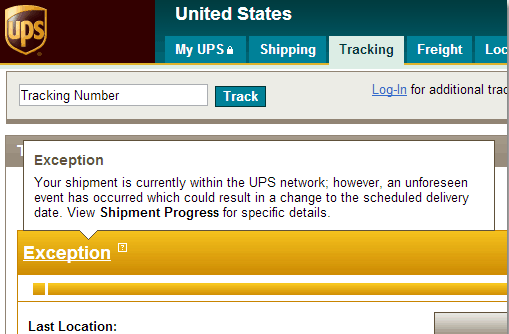
A delivery exception happens “when a package or shipment encounters an unforeseen event, which could result in a change to the expected delivery day,” according to the UPS website. A delivery exception does not always mean that the shipment will not arrive on its expected date, but alerts the recipient that the package has run into an issue during transit.
Delivery exception vs. shipment exception: what’s the difference?
If you’ve ever checked a tracking update and noticed terms like “shipment exception” and “delivery exception,” it’s easy to assume they mean the same thing. In many cases, they do signal a similar outcome—something has disrupted the normal delivery timeline. However, the difference lies in where the issue occurs. Shipment exceptions typically happen earlier in transit, such as delays caused by customs inspections, carrier processing issues, or network congestion. Delivery exceptions, on the other hand, usually occur at the final stage, often due to missed delivery attempts, incorrect addresses, or access restrictions at the destination.
Understanding this distinction is important for ecommerce operations because each scenario requires a different response. A shipment exception may simply require time or intervention with documentation, especially for international orders. A delivery exception, however, often calls for immediate action—such as verifying customer details, coordinating with the carrier, or scheduling a redelivery. While both situations can temporarily pause delivery, they are usually resolved once the issue is addressed, allowing the package to continue through the network.
What causes a delivery exception?
- Incorrect or Bad Address – Bad addresses are a common reason for delivery exceptions. Unless you want your package shipped to the wrong state, never ever guess the zip code. We recommend using an address validation software that syncs with the carriers to guarantee your address is inputted correctly.
- Delivery Exceptions Due to Holidays – On federal holidays, shipping carriers close their doors and take the day off. This can cause a delay or delivery exception if the carriers have a backlog of shipments
- Unpredictable Weather or Accidents – Natural disasters including hurricanes, tornado’s, wildfires or floods can create issues on delivery routes. If the carrier’s vehicle was involved in a transportation accident, the package may also experience a delay in delivery.
- Shipping Label Issues – Carriers will need to scan your package as it moves along the route. Delivery exceptions will occur if the label is damaged, missing information or hard for the carrier to read.
- No Signature – If no one is home to sign for the package, delivery will be delayed and reattempted the following day in most situations.
- Issues with Customs – Delays in customs can be unforeseen. Make sure you know the tariff codes for each of your SKUs to prevent delivery exceptions at customs.
Delivery exceptions can results in your packaging arriving late, being delivered on time or returned to the sender. If the return address is illegible, the package will be moved to the lost-and-found and sent to the auction house.
How FedEx, UPS, and USPS handle delivery exceptions
Each major U.S. carrier handles delivery exceptions differently, and understanding these nuances helps ecommerce businesses respond more efficiently. FedEx provides detailed visibility with estimated delivery windows, map tracking, and photo proof of delivery, along with specific exception codes (e.g., weather delays or business closures) that clarify the issue. UPS uses a simpler “Exception” status paired with explanations like mechanical failures or security delays, and often attempts address corrections, redelivery, or holds packages for pickup. USPS takes a more descriptive approach, using detailed status messages and often encountering delays due to federal holidays, while offering tools like Informed Delivery for tracking updates.
Across all carriers, the key takeaway is proactive monitoring and quick response. Whether it’s correcting an address, coordinating redelivery, or contacting support, acting early can prevent customer frustration. This is where working with a 3PL like Fulex adds value—our team tracks exceptions across carriers in real time and steps in to resolve issues before they impact your customers.
How to respond to a delivery exception as an ecommerce business
- Immediately Contact the Carrier – Look up the package by the tracking number on the carrier’s website. This will tell you the exact location of the package and delivery exception reason. Call the carrier to see if the problem can be resolved. You may be able to provide the correct address over the phone and get the shipment back in transit.
- Contact the Customer – The customer will be able to verify the mailing address or provide a new shipping address to give to the carrier. If you become aware of a delay, alerting the customer about bad weather conditions or other delivery exceptions will show your customer that you’re aware of the situation and doing all that you can to make sure their shipment arrives as quickly as possible. Continuous and open communication can turn a customer service nightmare into an opportunity to delight the customer. It’s best to explain, apologize and thank them for their continued patience.
- Issue a refund or resend the package – If an easier fix is not available and the package has been lost by the carrier or some other situation prevents it’s delivery, ask your customer if they would like a refund or if they would like you to resend the package.
If your package was damaged on its route or lost by the carrier, call the carrier back to claim insurance on the package.
How 3PLs Handle Delivery Exceptions for the Ecommerce Businesses
Fulex has an experienced and dedicated customer service team that will reach out to carriers on your behalf to help resolve any unforeseen issues with packages in transit. All shipping addresses are validated through the carriers before leaving the shipping facility to prevent issues with bad addresses. If a reshipment is needed, information from an existing order can easily be copier to a new order. If you have more questions on handling delivery exceptions or any other services, contact Fulex about it’s ecommerce fulfillment services.