Efficient inbound operations are the foundation of successful fulfillment. Before orders can be picked, packed, and shipped, inventory must move through receiving, inspection, storage, and preparation processes without delays. For brands working with warehouses in San Diego, CA, a strong freight-to-parcel strategy helps reduce costs, improve inventory visibility, and support faster order fulfillment.
At Fulex, we have spent more than 23 years helping small and mid-sized businesses manage inventory flow across multiple warehouse locations. Our experience shows that improving inbound processes creates measurable gains in fulfillment speed, accuracy, and customer satisfaction.
What Does Freight to Parcel Mean in Warehouse Operations?
The term freight to parcel refers to the process of receiving inventory through freight shipments and preparing those goods for individual parcel fulfillment. Freight typically arrives on pallets through truckload, LTL, or container shipments. Once received, inventory is processed and prepared for e-commerce and retail orders that ship through parcel carriers.
For warehouses in San Diego, CA, freight-to-parcel operations serve as the bridge between inbound logistics and outbound fulfillment. A smooth transition helps inventory become available faster while reducing handling errors and storage inefficiencies.
Why Inbound Planning Matters for Warehouses in San Diego, CA
Successful operations begin with strong inbound planning. Without clear shipment schedules, receiving teams can become overwhelmed by unexpected arrivals, resulting in dock congestion and inventory delays.
For warehouses in San Diego, CA, inbound planning allows teams to allocate labor, prepare dock space, verify shipment information, and coordinate storage locations before freight arrives. This proactive approach improves operational efficiency and reduces costly disruptions.
How Inbound Freight Moves Through a San Diego Warehouse
Most inventory enters warehouses in San Diego, CA, through truckload, less-than-truckload, or ocean freight shipments.
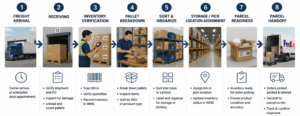
Upon arrival, shipments are checked against purchase orders and shipping documentation before unloading begins. After unloading, products move through warehouse receiving, inspection, barcode verification, and inventory recording. Once verified, inventory is either stored immediately or moved directly into preparation workflows depending on order demand and fulfillment requirements.
Freight-to-Parcel Best Practices for Faster Warehouse Handoffs
One of the most effective ways to improve freight-to-parcel operations is establishing standardized receiving procedures. Consistent workflows help teams process inventory quickly while maintaining inventory accuracy.
At Fulex, standardized receiving checklists, barcode scanning, and warehouse management system integration help create smoother handoffs between inbound and fulfillment teams. These practices allow inventory to move efficiently from receiving docks into active fulfillment operations.
How Dock Scheduling and Load Visibility Reduce Inbound Delays
Dock scheduling is often overlooked but has a significant impact on warehouse performance. When carriers arrive without appointments, receiving teams may struggle to unload shipments efficiently.
Leading warehouses in San Diego, CA use dock scheduling systems and shipment visibility tools to monitor inbound freight activity. Better visibility allows managers to adjust staffing levels, reduce wait times, and keep inventory flowing through the facility. Effective inbound planning combined with load visibility creates a more predictable operating environment.
How Pallet Breakdowns and Carton Flow Support Parcel Readiness
Once inventory is received, pallets must often be broken down into individual cartons or units for fulfillment. This stage is critical for achieving parcel readiness and ensuring products can be picked efficiently.
For warehouses in San Diego, CA, organized pallet breakdown procedures reduce handling time and improve storage efficiency. Products are labeled, sorted, and positioned strategically to support faster order processing. A strong freight-to-parcel workflow minimizes unnecessary touches while keeping inventory accessible.
Why Inventory Accuracy Starts During Warehouse Receiving
Inventory accuracy begins the moment products arrive at the warehouse. Errors during receiving can create stock discrepancies that affect fulfillment performance and customer satisfaction.
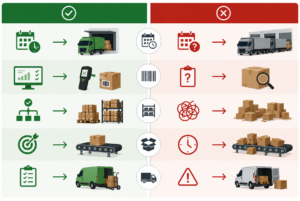
Modern warehouses in San Diego, CA rely on barcode scanning, inventory verification procedures, and real-time warehouse management systems to maintain accurate inventory records. These technologies help prevent shortages, overselling, and fulfillment delays while supporting long-term operational efficiency.
How Warehouses in San Diego, CA Can Reduce Inbound Delays
Reducing inbound delays requires a combination of technology, communication, and process discipline. Advanced shipment notifications allow receiving teams to prepare before freight arrives, while clear carrier communication helps avoid scheduling conflicts. Many warehouses in San Diego, CA also use cross-functional coordination between procurement, transportation, and warehouse teams. This approach improves warehouse receiving efficiency, shortens processing times, and supports faster inventory availability. Improved parcel readiness ultimately allows customer orders to ship sooner.
Common Mistakes To Avoid and What To Look for in a Warehouse Partner
Several common mistakes can negatively affect freight-to-parcel operations. Poor shipment visibility, inconsistent receiving procedures, inaccurate documentation, and inadequate labor planning often lead to bottlenecks and inventory delays.
When evaluating warehouses in San Diego, CA, brands should look for providers that offer strong inbound management capabilities, real-time inventory visibility, dock scheduling processes, and scalable fulfillment support. Fulex provides these capabilities through five strategically located facilities and more than two decades of experience serving growing businesses. A warehouse partner should not simply store inventory—it should actively improve operational performance.
How To Build a Better Inbound Process for Warehouses in San Diego, CA
Building a stronger inbound operation starts with visibility, consistency, and accountability. Organizations should establish clear receiving procedures, implement technology that supports inventory tracking, and maintain close communication with transportation providers.
For brands utilizing warehouses in San Diego, CA, investing in better inbound planning creates long-term operational advantages. By improving freight flow, reducing receiving delays, and strengthening freight-to-parcel processes, businesses can create faster, more reliable fulfillment operations that scale alongside growth.
Freight-to-Parcel Workflow
Freight Arrival → Dock Appointment → Unloading → Inspection → Inventory Verification → Pallet Breakdown → Storage or Pick Location Assignment → Parcel Fulfillment Preparation → Carrier Handoff
Freight to Parcel FAQS:
What does freight to parcel mean?
Freight to parcel refers to converting inbound freight shipments into inventory that is ready for individual parcel order fulfillment and carrier distribution.
How do warehouses handle freight to parcel operations?
Warehouses receive freight, verify inventory, break down pallets, organize products, and prepare inventory for parcel shipping through fulfillment workflows.
Why is inbound planning important for warehouses in San Diego, CA?
Inbound planning helps warehouses schedule labor, manage dock capacity, improve inventory visibility, and reduce receiving delays.
What helps reduce delays during warehouse receiving?
Advanced shipment notifications, dock scheduling, barcode scanning, and clear carrier communication all help improve receiving efficiency.
What should brands look for in a warehouse partner for inbound operations?
Brands should prioritize experience, inventory visibility, receiving expertise, scalable operations, and strong freight-to-parcel processes that support fulfillment growth.